Gregory Desrosiers Montreal

  • Subscribe to our RSS feed.
  • Twitter
  • StumbleUpon
  • Reddit
  • Facebook
  • Digg

Sunday, 2 December 2012

Princess Peach In India [Story Idea]

Posted on 14:25 by Unknown
Here's a really fancy story I have made, although it is more of an initial idea and comes from a visual I had more than two years ago. Enjoy reading! :)

If you take the India Documentary "Growing Up In India" very seriously, and you put in a character who shares beauty, wealth and pride, you got a valuable insight that is like gold.

Now, experience it with Princess Peach of the Mushroom Kingdom, in Nintendo's first GTA-style sandbox video game with only cartoon violence,
Princess Peach in India!

In the wonderful city of Mumbai, since its history at the time the British came in, there were poverty and discrimination upheavals, now the city is in deep turmoil. However, the issues with the Indians do not change their own feelings, because of the values of their cultures.


But still, people who really care about what's going on so much feel like they should help out the people of India. Although many social workers have been sent out there, it's still going to be a while before the city is in its beauiful path since its long ancient history.


When the news of the problems of India reached the Mushroom Kingdom, Princess Peach actually felt that she should explore the new world of India's culture. Her best friend, Princess Daisy, wants to join in to see the values of India and possibly help the government call in more social workers and non-governmental organizations.


So, off to the country of India. Princess Daisy rented a car and decided to drive Princess Peach and two other social workers: Rick Henderson, the black-haired young man with some fabulous India clothing, and Jim Broadway, one bright 25-year-old who love to get along with others in a different country.


As the four met the government executives outside Ashok Towers I, a new trouble approaches. The Koopa Troop comes in the city, having its members split up into seperate gangs, causing discrimination to the Indian children. The four social workers had to escape in the same car as before and head to the Kurla district of the city.


With only about 45,000 Indian Rupees in hand (about $1000 CAN), Princess Peach tells the 2 new social workers to go sleep at their hotel, while she decides to go to her other hotel with Princess Daisy. They decided to meet again the next day, since it was already 5:00 in the afternoon already.


Will Princess Peach learn the valuable Indian culture and help her friends stop the Koopa Troop from assimilating the Indian government? She will explore the religins, the clothing, the dancing and the things that she will find it valuable.


By Gregory Desrosiers

Read More
Posted in | No comments

Saturday, 1 December 2012

The Black Glove [Short Poem by me]

Posted on 21:16 by Unknown
This is a poem written by me back in April 2010. I'm not sure if this was for an assignment, but this is what I got.

It may not be good as compared to how I would write it now, but I want to show off my original work for the sake of revealing more of myself.

Enjoy!


The Black Glove
By Gregory Desrosiers

In the cold winter is a snowy day
Where the season has froze the bay
Out on a hill comes a dressed-up boy
Who is lacking himself with joy
Covering the right hand is a black glove
Where the left hand has a white glove
Out goes a battle where the black glove is pulling
Then the left hand is provoked where the white glove is pushing
A sudden cry comes from the boy
Where the two gloves have a coy
The provoked boy makes an enormous scream
Where the white glove diminishes like cream
The black glove who is a winner
Pulls on the boy for his own dinner
The tormented boy trips on a covered rock
Where the black glove digs in like a sock
The black glove in the snow surrenders itself
And satisfaction hits the boy for himself
The recovered white glove gives the boy a thumbs-up
Where out came a sentimental successful yup.
Read More
Posted in | No comments

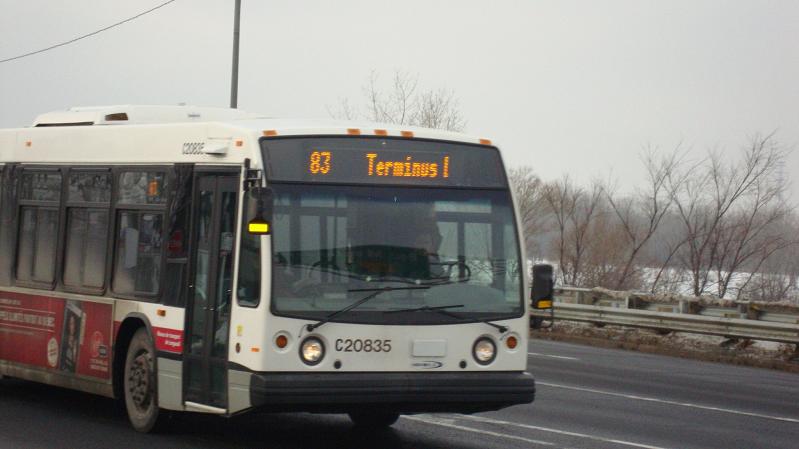
Longueuil RTL #83 (Sec. 5 English Short Story)

Posted on 21:01 by Unknown
Hello, guys.

I want to share with you this short story I wrote when I was in my English class back in Fall 2010 as part of my final secondary level at Heritage Regional High School.

This is what was one of the things I had resulted from getting into freaky with the font used on the LED header of one of the buses that Reseau de Transport de Longueuil uses.

Enjoy!

LONGUEUIL RTL #83
By Gregory Desrosiers

Special Thanks to Ms. Parsons (Assignment Planning) and Michelle Steben (Proofreader).

            The morning sun of Friday. The fresh month of June. It is reminding me of Montreal as I stand at the corner. Perhaps when you’re a technical lover, you would prefer going to a city like Montreal. If I want to go to Montreal, I shall take one step ahead by any means necessary. Nothing will stop me.
            Anyway, a bus pulls up with its doors opening in front of me. It is 9:47 AM on my watch. I climb in and what I see is nothing but the front of a NovaBus low-floor bus, belonging to Line 83 of our transit firm, Longueuil RTL. “Bonjour, Monsieur Lapierre,” I said to my supervisor for today.
            “Allo, Monsieur Gary Perold,” said Mr. Lapierre. “Are you ready to take your final test? ‘Cause if you don’t, you won’t feel proud of yourself.” Chris laughs at it manically.
            I chuckled and said, “Of course I wouldn’t, but I’m ready.”
            “Okay, you know the drill,” said Mr. Lapierre. “Starting from the corner of Samuel-de-Champlain and Albanel, I want you to drive this bus, follow the schedule for the last leg of this line and get to Terminus Longueuil on time. Get there by 10:05.”
            “Even though Boucherville is quiet, you need to be tight,” I said.
            So, feeling easy-going and determined, I push my foot on the gas and start the test. I look at the rearview mirror for the first time and see myself and my blue shirt-and-shorts combo, along with my sunglasses. There is even my supervisor, with his driver’s uniform and black shorts.
Samuel-de-Champlain is straightforward as I stop once to pick up a businesswoman. When you are Samuel de Champlain, you would want to be proud of yourself. Who should I be? I should just be myself.
            The green trees give me a clean feel as I drive on Fort-St-Louis. 3 stops and it’s nothing but saying hello to the oncoming passengers where I smile. Humans give me a taste of pride, not to mention that I have volunteered in several campaigns. Whenever you make respect, you earn respect of yourself, because you trust in yourself. Can you see the difference? Respect influences you so much.
            Anyway, coming up on Marie-Victorin, the right side of that road is so quiet and calm that unfortunately, I can’t feel quite calm the same way as outside, because there are people on board, about 40 people. Aww. It’s a lot of noise. But there should be some noise for me to get the feeling of Montreal. It’s about vehicle horns. As I stop the bus to pick up more people, Mr. Lapierre tells me that I am doing good so far. Nothing worries him too much for now. Not to mention he told me earlier that he judges his trainees by his own eyes and his watch, not by the clipboard.
            Then, I prepare myself for the glory as I accelerate the bus down Route 132. Construction. Traffic. I take one step ahead to deal with them safely as I hold my speed. Veering out of the way of the construction site and flowing with the traffic, I am calm and believe that I will get my chance.
            I come off the exit, well two of them, and after a few turns and whatnot, I stop the bus at the debarking zone at Terminus Longueuil. “Congratulations, Gary. You were able to arrive at Terminus Longueuil just in time. You are now an official bus driver,” said Mr. Lapierre, as he hands me a new driver’s uniform.
            “Thank you, sir. I stayed forward so much,” I said.
            “Mmm, you seem to be proud of yourself. Anyway, your first work day is on Monday. Take care,” said Mr. Lapierre.
            My girlfriend is waiting for me outside, just near the doors, clapping. After shaking hands with Mr. Lapierre, I get off the bus. I stand in front of her and tell her that I now have the full-time job as a bus driver. Then, together, we reach out our arms and we hug and kiss each other as I have done my test well.

© 2010 Gregory Desrosiers. Longueuil RTL is of property of Reseau de Transport de Longueuil. Nova BUS is property of Nova Bus Inc.


Thanks for reading!
Read More
Posted in | No comments

Super Mario Script 1 (v 2.3) [Super Mario Galaxy font, with a few photos]

Posted on 17:37 by Unknown
Hello there.

Do you recognize the font of this text? I'll give you two clues.

The one below is the a sample sentence of different sizes.

The quick brown fox jumped over the lazy dog.
The quick brown fox jumped over the lazy dog. 

ABCDEFGHIJKLMNOPQRSTUVWXYZ
abcdefghijklmnopqurstuvwxyz 
1234567890.:,; ' " (!?) +-*/=&$#@ ĆćĈĉĜĝĢģĤĥĨĩĴĵĶķĹĺĻļŃńŅņŒœŔŕŖŗŚśŜŝ
ŞşŠšŢţŨũŴŵŶŷŸŹźŽžƒǴǵȨȩ


Here's another clue: 
(Look at the font of the copyright string below the action string "Press A and B.")


What's the answer?

Super Mario Script 1 v. 2.3, 

a font that is made fan-based on the actual font of several Mario games used in text, including Super Mario Sunshine.

This was downloaded from a site called "Mario Fan Games Galaxy."

Fonts like this are so amazing to me I find practical use for them in what I want to do. I want to use this font to do more than what Nintendo did to their games.

The font itself is called 'Pop Happiness,' and was designed by FontWorks, Inc. of Japan. If only if they can sell the font for residential use; and of course I would sacrifice over 7000 yen for just that.

Anyway, post comments here to see if you have any other ideas of what blogs I should make or any great pictures you would want me to upload.

Thank you and have a great day! :)
Read More
Posted in | No comments

Sunday, 18 November 2012

Java Programming : For Loop Example

Posted on 18:15 by Unknown
Here's an example of using a for loop in JAVA. This program uses a loop inside another to create a list of integers where the number on the left goes between 1 to 4, and the other goes between 2 to 4, making sure the second number is printed as higher than the first number and going through the cut cycle.

public class LoopingProblemNumber1
{
    public static void main(String[] args)
    {
       
        for (int x = 1; x <= 3; x++)
        {
            for (int y = x + 1; y <= 4; y++)
            {
                System.out.println(x + "\t" + y);
            }
        }
    }
}


Output:

1    2
1    3
1    4
2    3
2    4
3    4
Read More
Posted in | No comments

Java Program : Fat Gram Calculator

Posted on 18:06 by Unknown
Here's another program I want to share with you guys, which is simply a program that multiplies the number of grams of fat in food by nine, which gives off how many calories you earn upon eating a serving of that snack or provision. You need to enter the number of calories in the actual serving in that calculator and the number of grams of fat, and what will do is it will calculate the percentage and determine whether the food has a high amount of fat, at least 30%, or not.

This time, there are no notes taken on how this works.

import javax.swing.JOptionPane;
import java.text.DecimalFormat;

public class FatGramCalculator
{
    public static void main(String[] args)
    {
        String inputString;
        float totalCalories,
            fatGrams,
            caloriesFromFat,
            ratio,
            percent;
       
        DecimalFormat formatter = new DecimalFormat("##");
       
        inputString =
                JOptionPane.showInputDialog("How many calories are in the food item you want to study?");
        totalCalories = Float.parseFloat(inputString);
       
        inputString =
                JOptionPane.showInputDialog("How much fat is in the food item, in grams?");
        fatGrams = Float.parseFloat(inputString);
       
        caloriesFromFat = fatGrams * 9;
       
        ratio = caloriesFromFat / totalCalories;
       
        percent = ratio * 100;
       
        if (percent > 100)
            JOptionPane.showMessageDialog(null, "Invalid entry.");
       
        if (percent <= 100)
            JOptionPane.showMessageDialog(null, "Number of calories in food item: " + totalCalories +
                                        "\nNumber of grams of fat in food item: " + fatGrams +
                                        "\n\nPercent of calories of fat to total calories: " +
                                        (formatter.format(percent)) + "%");
       
        if (percent < 30)
            JOptionPane.showMessageDialog(null, "The food item is low in fat.");
       
        System.exit(0);
           
    }
}
Read More
Posted in | No comments

JAVA Program: Military Time to Real Time

Posted on 17:57 by Unknown
Hello, people. How you doing? I'm really busy with my college homework, but I am working so hard to pass my courses and continue in my studies to pursue my future career as a producer and director of computer games.

Want to get into the words of Namco's Time Crisis II? Here's another JAVA Program for you guys; this one was done last year in my Java Programming Level 1 class with Linda McGirr.

Luckily, this program, with the source file name MilitaryTimeDifferenceToRealTimeImproved.java, includes all the necessary comments to explain the process.

One thing before you read: A single line of comments is marked by two forward slashes, while a block of comments is marked as follows:

/*
*
*
*/

The program was written on Eclipse Indigo, a free IDE that provides the necessary tools and shortcuts to programming JAVA applications.

Enjoy reading the program! (This file is copied to this Blogger post as is.)


/*
*
*    Military Time Difference in Real Time Assignment
*
*    This program is designed to yield out the difference
*    of two independent military times, what's current
*    and what's due for, let's say, an estimation of
*    how long left before the Afghan Forces attack
*    a United States base in Kabul, in real time
*    (hours : minutes). When we enter the times of what's
*    current and what's due, this program will produce
*    the result in real-time format. This is helpful for
*    military personnel to interpret the difference in
*    real-time format to their relatives who can't
*    really convert from military time to real time
*    by themselves.
*
*    File Name: MilitaryTimeDifferenceToRealTimeImproved.java
*    Developed by Gregory Desrosiers, Student of Champlain College
*    St-Lambert, Quebec, Canada
*
*    Teacher : Linda McGirr
*
*    Assignment Record Dates
*
*    Psuedocode Start Date: Wednesday, September 21, 2011
*    Psuedocode End Date: Wednesday, September 21, 2011, 12:57 PM
*
*    Coding Start Date: Wednesday, September 21, 2011, 1:13 PM
*    Coding End Date: Saturday, September 24, 2011, 2:06 PM
*
*    The coding has been modified as of September 26, 2011 at 1:21 PM.
*
*    Comments are provided in each step of the process of this program.
*    The psuedocode is provided in the 'Assignment 2 - Psuedocode.docx'
*    file. You will need Microsoft Office Word to open it.
*
*    The psuedocode has been modified as of Wednesday, September 21,
*    2011, at 4:47 PM. This psuedocode, however, only covers the
*    logic of the original program where there were problems found
*    with the output, so there are logical errors.
*
*    No psuedocode is provided in this version because as of September 24,
*    I had way too much homework to make a psuedocode that matches the
*    style of this one, so the psuedocode is omitted.
*
*    To make the programming easier, this program has two 'if'
*    statements, a code that has not yet been covered by
*    Ms. McGirr in the Starting Out With Java textbook.
*
*    There are no if statements for correcting the entry of negative
*    numbers and decimals.
*
*    Part of the program was aided by Bruno Gosselin.
*/


// The following statement is needed to enable dialog boxes.

import javax.swing.JOptionPane;
/*
     The following four lines are important for the program to
     work where the two sets of braces connect the statements to
     the method and the method to the class file, similarly, the
     binary file in the Java language.
*/

public class MilitaryTimeDifferenceToRealTimeImproved
{
    public static void main(String[] args)
    {
       
        // Here are the variables declared with comments explaining
        // their use and their meaning.

       
        String inputString;
                /*
                 * This holds the input for the current military time
                 * and the due military time from two dialog boxes.
                 * They will then be used in the parse methods to
                 * convert the characters inputted into integers.
                 */

       
        int currentMilitaryTime,
                /*
                 * This holds the natural number of the current
                 * military time. Natural, because time numbers
                 * cannot be negatives.
                 */

       
            dueMilitaryTime,
                /*
                 * This holds the natural number of the due
                 * military time.
                 */

           
            dueHours,
                /*
                 * This holds the first digit in the
                 * dueMilitaryTime variable.
                 */

           
            dueMinutes,
                /*
                 * This holds the last two digits in the
                 * dueMilitaryTime variable.
                 */

           
            currentHours,
                /*
                 * This holds the first digit in the
                 * currentMilitaryTime variable.
                 */

           
            currentMinutes,
                /*
                 * This holds the last two digits in the
                 * currentMilitaryTime variable.
                 */

           
            outputHours,
                /*
                 * This holds the result for the hours that will
                 * be displayed later on in the program.
                 */

           
            outputMinutes;
                /*
                 * This holds the result for the minutes that
                 * will be displayed later on in the program.
                 */

       
        /*
         * The two statements shown below are for the input of the current
         * military time and converting the input into a number because
         * the entry will only be a string of characters.
         *
         * This is where we see the first dialog box.
         *
         * For both dialog boxes, the programming style is not met,
         * but this is for the purpose of printing the code on paper only.
         */

       
        inputString =
            JOptionPane.showInputDialog("What is the current military time?");
        currentMilitaryTime = Integer.parseInt(inputString);
       
        /*
         * The next two statements follow the same process as the current
         * military time, except this time, it's for the due military time.
         */

       
        inputString =
            JOptionPane.showInputDialog("What is the due military time?");
        dueMilitaryTime = Integer.parseInt(inputString);
       
       
        /*
         * Now, we seperate the hours and minutes from each inputted
         * values. To do this, we use both the division and modulus
         * operators where an hour in military time is set at every
         * interval of 100. Technically, there are 60 minutes in
         * one hour, but the hours fit into 100, so we use the division
         * of 100 for hours and the modulus to get the remainder
         * of the hour division, which is then assigned to the
         * variable representing minutes.
         */

        currentHours = currentMilitaryTime / 100;
       
        currentMinutes = currentMilitaryTime % 100;
       
        dueHours = dueMilitaryTime / 100;
       
        dueMinutes = dueMilitaryTime % 100;
       
        /*
         * This is where we find the difference in time where the
         * two following statements are effective when the
         * due military time is later on in the same day
         * than the time it is right now.
         */

       
        outputHours = dueHours - currentHours;
       
        outputMinutes = dueMinutes - currentMinutes;
       
        /*
         * Now, we do include the most crucial process, but there
         * are a couple of catches.
         *
         * One is what if the variable 'dueMinutes' is smaller
         * than 'currentMinutes' in inputs where one example
         * would be that the current time is 0945 hours and
         * the due is 1030 hours? The result will be a negative
         * number and plus one on the 'outputHours' variable,
         * which doesn't make sense.
         *
         * To solve the first catch, we use a conditional
         * statement where if the result of minutes is negative,
         * it will subtract one from 'outputHours' and add
         * 60, which gives the complementary value of
         * 'outputMinutes' and stores the value in that
         * variable. Braces are used because we are executing
         * two statements at the same time.
         */

       
        if (outputMinutes < 0)
        {
            outputHours -= 1;
            outputMinutes += 60;
        }
       
        /*
         * Another catch is, what if the current time is before
         * midnight and the due is after midnight? We do get
         * the minutes right, but not the hours. It will be
         * negative. To compensate it, we add 24 to
         * 'outputHours' where it gives us the complementary
         * value and stores the value in it. There are no
         * braces because we're only executing one
         * statement.
         */

       
        if (outputHours < 0)
            outputHours += 24;
       
        // This is where we display the result.
       
        JOptionPane.showMessageDialog(null, "Current time in military format: "
                                    + currentMilitaryTime + " hours." +
                                    "\nDue time in military format: " +
                                    dueMilitaryTime + " hours." +
                                    "\n\nThe difference between those times is "
                                    + outputHours + " hours and " +
                                    outputMinutes + " minutes.");
       
        /* The next statement is for the last dialog box.
         * This is the last output we will see before the
         * program terminates (closes).
         */

       
        JOptionPane.showMessageDialog(null, "Program Complete.");
       
        /* This is the last statement in the program.
         * It will stop dialog boxes from appearing and
         * closes the program.
         */

       
        System.exit(0);
    }
}
Read More
Posted in | No comments
Newer Posts Older Posts Home
Subscribe to: Posts (Atom)

Popular Posts

  • The Quebec Ministerial Exam of College English (English Exit Exam)
    Hello, everyone. How you doing? I'm good. There is some unfortunate news for me to deliver, though I am planning to try to work myself a...
  • String Letter Counter (JAVA Program)
    Hello, guys. This is another JAVA Program I want to share with you guys. It's a counter for a specific letter in an entered string strai...
  • The Asperger Computer: A Self-Published Guide on Asperger's Syndrome and Multimedia
    The Asperger Computer - A Self-Published Guide on Asperger's Syndrome and Multimedia by Gregory Desrosiers How is Asperger’s syndrome li...
  • The Asperger Computer (e-book) - Sample Paragraph
    This is the sample paragraph for my e-book adaptation of a speech I've delivered at my college, Champlain College Saint-Lambert, on May ...
  • The Asperger Computer - Table des matières et une sample
    Excusez-moi si il ya beaucoup d'erreurs avec l'écriture , j'ai dû utiliser un traducteur pour obtenir ce parce que je su...
  • Arcade Games to check out
    Hello, everyone. How you people doing? I'm okay, though I am feeling mightily frustrated and lazy to try to work on a lot of things befo...
  • Fundraising Project (To Autism Society Canada)
    Hi, everyone! How are you people doing? I am feeling tired and stuff, but there are a couple of things I want to bring up with you. Tomorrow...
  • JAVA Program: Number Loop (Experimental Program of the Timer class)
    Hello there. Here's another program I want to present to you: it's a self-running experiment that tests the Timer class provided in ...
  • JAVA Program: Command-based String Remover in Text Files
    Hello, everyone. Let me share with you the code on one of the programs I did back in March 2013, while doing my Data Structures class. This ...
  • JAVA Program: Military Time to Real Time
    Hello, people. How you doing? I'm really busy with my college homework, but I am working so hard to pass my courses and continue in my s...

Blog Archive

  • ▼  2013 (38)
    • ▼  August (2)
      • Fundraising Project (To Autism Society Canada)
      • A New Phone!
    • ►  July (9)
    • ►  June (12)
    • ►  May (12)
    • ►  April (2)
    • ►  January (1)
  • ►  2012 (24)
    • ►  December (13)
    • ►  November (3)
    • ►  October (5)
    • ►  September (1)
    • ►  August (2)
Powered by Blogger.

About Me

Unknown
View my complete profile